about
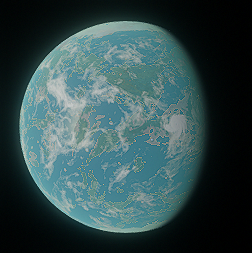
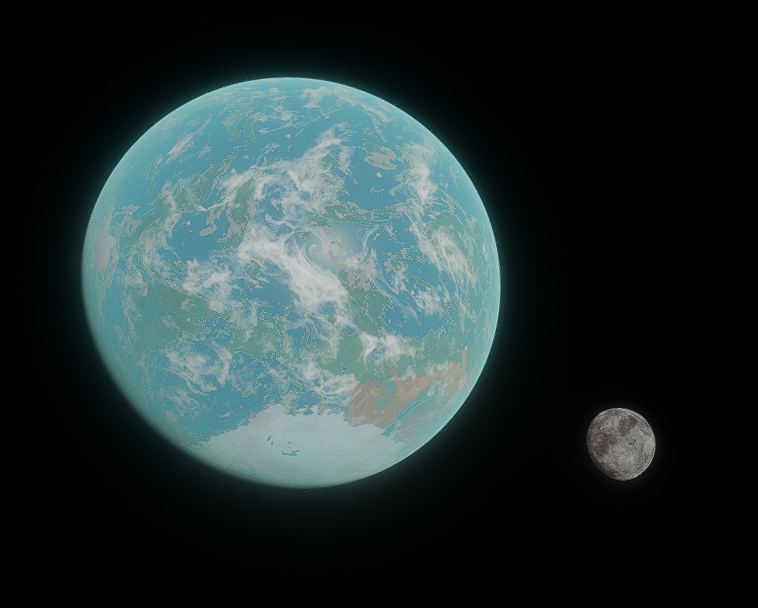
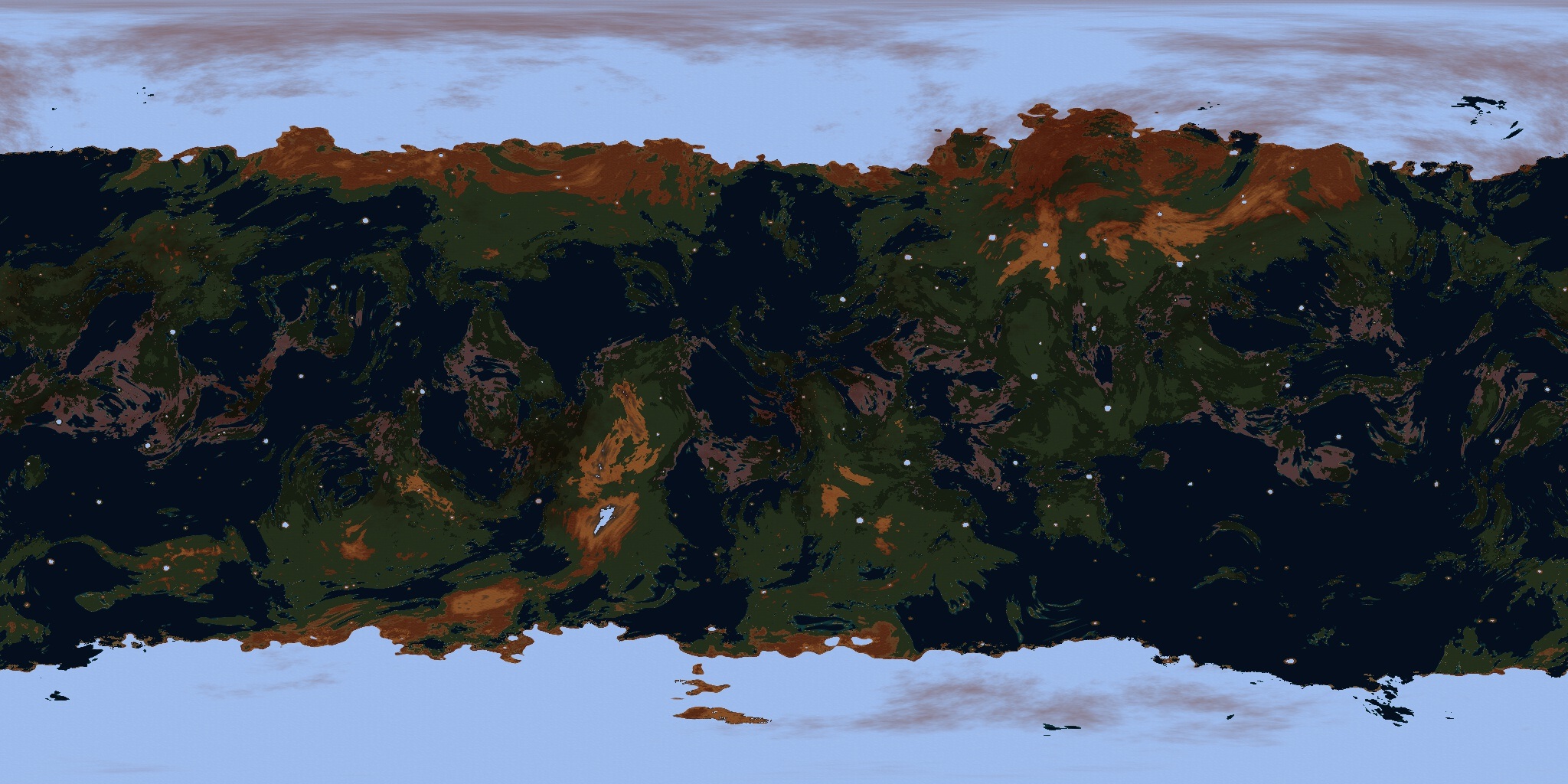
Ageas (aka RS 0-6-57804-648-2690-7-142604-929 3) is the fourth planet of the Autchen system and the only astronomical object known to carry life, due to the fact that Ageas has vast oceans, covering 30% of the world and allowing marine life, with land harbouring terrestrial life (like Agians). Ageas is a temperate mesobaric mesomarine terra with carbon-based marine/terrestrial multicellular life formed via abiogenesis, with an average tempurature of -5°C. Ageas formed around ~11 billion years ago, with ancient Agians only popping up 500 million years ago (who had lots of hair due to the ice age), and modern Agians around 60,000 years ago. Ageas hosts lots of marine and terrestrial life such as: Agians (intelligent, terrestrial), Haorests (terrestrial), Prandances (terrestrial), and Loptiers (marine). The word "Ageas" comes from the Agian word for the world. Ageas has only 1 natural satellite, being the Lun.Ageas's atmosphere is composed of mainly Nitrogen (54.6%), Oxygen (30.3%), Water Vapor (12.6%), and Carbon Dioxide (2.44%) building sustainable life forms. Trace amounts of Sulfur Dioxide (62ppm), Neon (16.2ppm), Argon (9.33ppm), Krypton (959ppb), and Carbon Monoxide (51.7ppb). The atmospheric pressure of Ageas is about 1.249atm at sea level, with a density of 1.3977kg/m3. The line between the atmosphere and space is around 126.60km, with the tropopause height being 13.72km and the height where the atmosphere becomes homogeneous being 9.34km. The exosphere tempurature of Ageas can reach up to 1203.2°C. The speed of sound in the atmosphere is 350m/s, at sea level. The average molar mass of the entire atmosphere is 28.354, and the entire mass is 6.4481*1018kg.
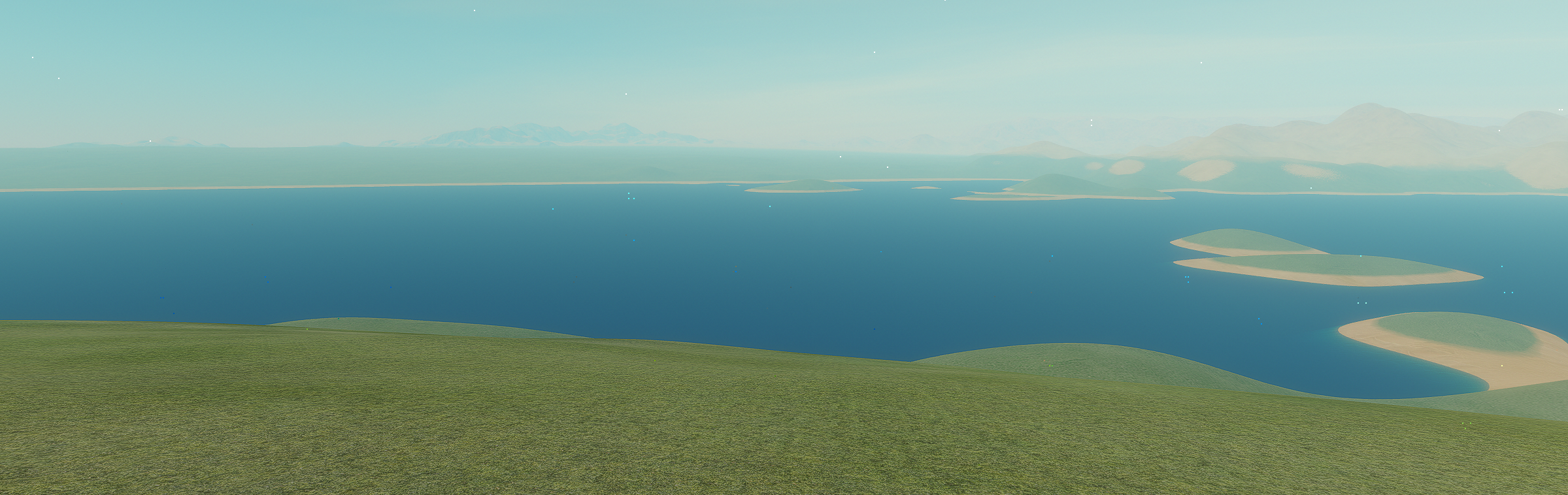
Ageas's hydrosphere is composed out of pure H2O (water), making it the only known planet with liquid water on the surface, making it's density 1gm/cm3, and a molar mass of 18.015. The freezing point of this water is 0.01001°C, and the boiling point 106.48°C. The depth of these oceans reach down to 6.98km, where the composition is rock and pressures reaching 594.9atm.
Ageas has a mean diameter of 12396.15km, but due to it's rotational period it bulges more around the equator, with an equitorial diameter of 12419.21km, and a polar diameter of 12350.14km. From this we can estimate the oblateness of 0.005562, and the circumfrence of Ageas being 39016.09km (ignoring uneven terrain). Ageas has a mass of 4.9673*1024kg, with a density of 4.9804g/cm3. Thus, the ASI of Ageas, is unsuprisingly, exactly 1. Ageas's geological internal structure is made out of 86.1% silicate mantle, 10.7% metallic core, and 3.15% water/icy envelope.
Ageas is 11.9 billion years old, being the same age as it's star Autchen, and is said to last 12 more billion years until Autchen becomes a supergiant and swallows Ageas in a whole. Ageas has a mean gravity of 8.6178m/s2, however this is different from where you are on Ageas, for example the most extreme examples are gravity on the equator (8.5551m/s2), and gravity on the poles (8.6822m/s2). From this, we can calculate the circular (orbit) velocity being 7.32km/s, and the escape velocity of 10.35km/s. The albedo fraction of Ageas is about 0.54, with an insolation of 1.5343 and a tidal heating of 4.5726*10-8W.
Due to the Lun's gravitation influence, Ageas is technically in a planetary barycenter, with a semi-major axis of 883.0030km from the center. The solar day on Ageas is 19 hours, and 30 minutes, with the year being 226.327647 earth days. Ageas orbits 0.7125AU away from Autchen in an elliptical orbit (orbital velocity is 34.25km/s), with an eccentricity of 0.006, and an inclination of -0.147835967 degrees. The hill radius of Ageas is 1025116km, and the roche limit is 8999km.